
Collingsworth County Arrest Warrants Explained
An arrest warrant is a magistrate's written command to bring a named or described person before the proper court. Texas procedure demands a probable-cause basis. It also spells out what the order must contain. The warrant is court process, nothing more. It is not the case file, and it will not tell you whether the sheriff has served it. In Collingsworth County, find the issuing court and ask its clerk about the warrant, the affidavit, and the return as three separate items. The Sheriff's Office handles execution and custody questions, but it is not the issuing authority.
Collingsworth County Arrest Warrant Probable-Cause Review
Chapter 15 of the Texas Code of Criminal Procedure governs warrants of arrest. The order generally names or describes the accused. It states the offense and directs an officer to bring the person before the proper court, all under the magistrate's authentication. A sworn complaint or other authorized material supports the probable-cause decision. Collingsworth County works under these state rules like every other county. The county publishes no local warrant sample, so assume nothing about a Collingsworth form or numbering convention. The official Chapter 15 text sets out the full arrest-warrant provisions and is the source to read for what the order requires.
Work from the current statutory text, and ask the Collingsworth County clerk which warrant items in the case file are public.
Inside a Collingsworth County Arrest Warrant
Collingsworth County publishes no local warrant sample. State law still sets the fields a warrant must carry, but no searchable county record guarantees each one appears online. The local number format is undocumented, so do not assume a pattern.
| Accused | Name or legally sufficient description. |
|---|---|
| Offense | Charge or offense named in the warrant. |
| Command | Direction to take the person before the proper court. |
| Magistrate | Signature or authorized authentication. |
| Case material | Complaint, affidavit, return, and docket event where public. |
| Sample format | No Collingsworth sample located |
Collingsworth County Arrest Warrant Clerk Route
The 100th District Court serves Collingsworth County and four other counties. Its judge's listed office sits outside Wellington, which reflects that multi-county reach. The dated 2025 personnel sheet is the source for those assignments. Treat it as a snapshot and confirm current assignments before relying on it. For district criminal records, the local District Clerk remains the practical first call. The County Court and lower courts keep their own files. Do not fold them into the district docket. The official Collingsworth County District Clerk page gives the county office contact, and it shows the local file route rather than any individual warrant. Ask which clerk holds the warrant, the affidavit, and any return.
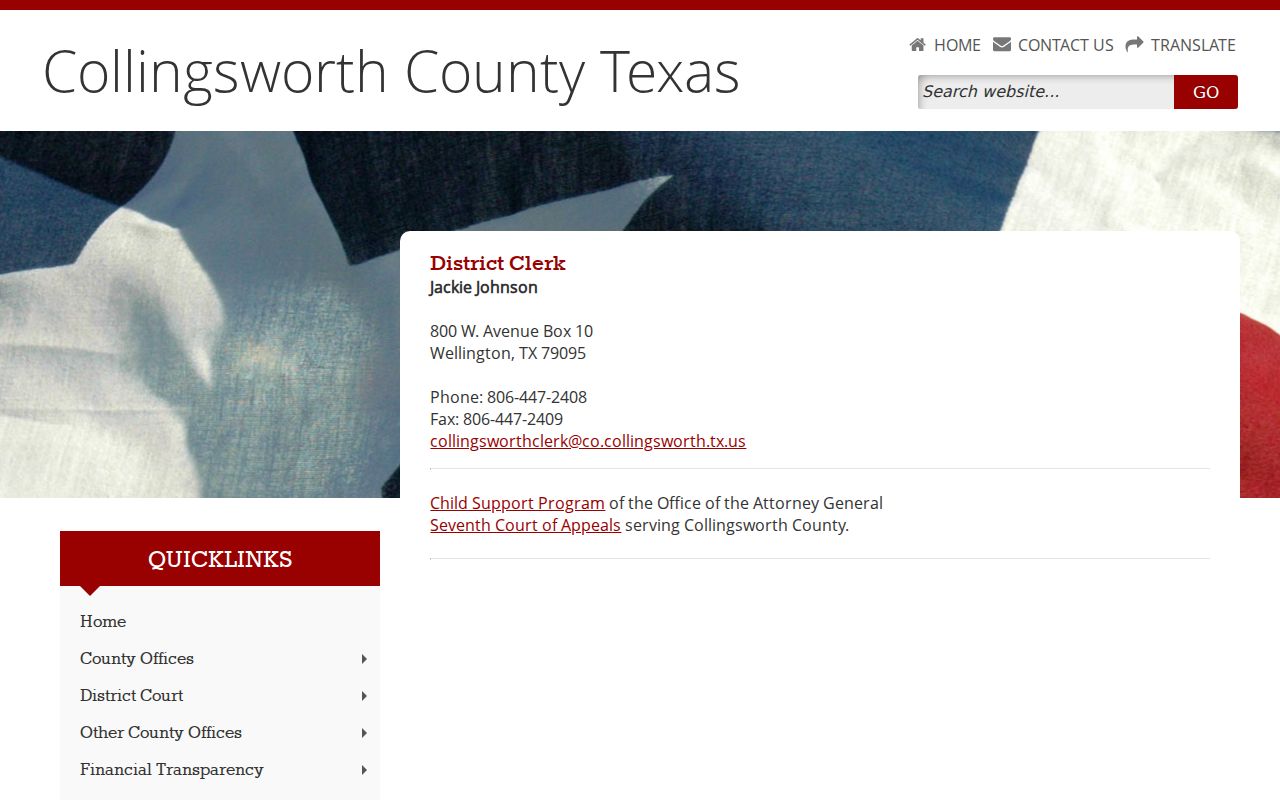
One call can settle the routing. Ask the Collingsworth County clerk whether your request belongs with the County Clerk or the District Clerk before you send anything in writing.
Serving Arrest Warrants in Collingsworth County
Authorized peace officers execute process in Collingsworth County. A Texas arrest warrant extends statewide, so service is not confined to the issuing county. The Sheriff's Office publishes 806-447-2588 but lists no warrant-unit extension, service policy, booking address, or surrender hours. Ask the court whether a return has been filed, and ask the sheriff about execution or custody routing. The county minutes identify a constable role, though they assign no particular warrant desk or service policy.
Collingsworth County Arrest Warrant Record Access
An arrest warrant and its supporting affidavit are public records under Texas procedure, subject to sealing and redaction. The OCA County Clerk Manual lays out the clerk-record context. Public access does not put the record online. It does not guarantee release of every detail either. Request the warrant, the affidavit, and the return by name so the clerk can route each item. A Collingsworth County court-held judicial record follows the Texas Rule 12 request policy. County executive records may fall under the Public Information Act instead, with law-enforcement exceptions in play. The clerk or sheriff can explain the right route and any withholding basis.
Comparing Arrest, Summons, and Bench Warrants
In a Collingsworth County case, these papers do different jobs. An arrest warrant commands custody. A summons orders the person to appear, without that arrest command. A bench warrant or capias can follow a missed court setting. A capias pro fine targets unpaid post-judgment fines or costs, not a new allegation.
| Record | Why it may issue | First question |
|---|---|---|
| Arrest warrant | Probable cause | Which court issued it? |
| Summons | Notice to appear | What date and court are listed? |
| Bench warrant or capias | Missed court duty or authorized process | What event is in the docket? |
Collingsworth County Search Warrant Access Follows Execution
A search warrant works differently from an arrest warrant. It lets officers look for specific property or evidence. Texas requires probable cause backed by a sworn affidavit first. That affidavit becomes public after the warrant is executed, unless a judge seals it or another legal limit applies. The Chapter 18 source sets out these search-warrant rules in full. Collingsworth County posts no sample search warrant online, so ask the district clerk for copies. Name each item separately: the warrant, affidavit, return, inventory, and execution date. The official Texas chapter on search warrants covers the affidavit timing too.
Before reading a missing affidavit as proof of no warrant, ask the Collingsworth County court whether an order delays disclosure.
Collingsworth County Federal Warrant Checks
A federal warrant never lands in a Collingsworth County clerk's file. Federal judges issue it, and the federal court keeps it. The county sits in the Northern District of Texas, Amarillo Division, so that court controls the record. PACER can list public docket events there, though sealed or pre-docket warrants may not show up. County warrant records cannot confirm federal status either way. The PACER Northern District of Texas Amarillo court lookup is a federal docket source, not a local warrant search.
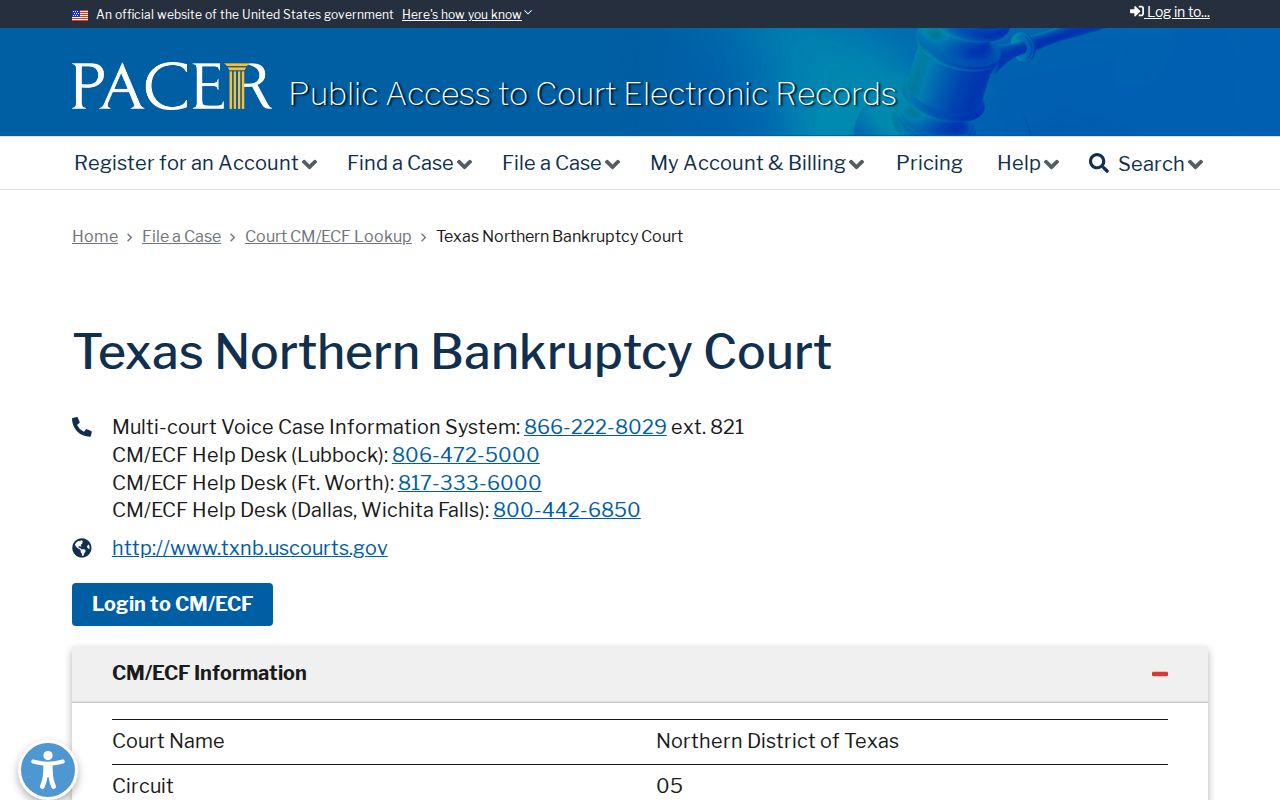
Take a personal federal matter to the federal clerk or federal counsel, not to Collingsworth County offices. A blank docket does not prove that sealed process is absent.
If There's an Arrest Warrant for You
Start with the issuing court. Ask what record is on file, whether counsel can arrange a setting, and whether an appearance, bond, or motion is required. The Sheriff's Office handles execution questions instead. No Collingsworth County source publishes a surrender window, jail entrance, bond amount, or payment method.
Confirm before appearing. Ask the court and Sheriff’s Office where to report, whether booking is expected, and whether another hold may affect release.
After any court action, ask for a filed order, docket entry, or receipt. Keep that paper. Only the issuing court can recall a warrant, never a third-party search tool. For a serious or unclear case, talk with a Texas attorney first, even in Collingsworth County.
Collingsworth County Arrest Warrant Service Questions
A Collingsworth County arrest-warrant record request works best when it is specific. Name the court, the date range, and the case number if you have it. Say whether you want the warrant, the affidavit, or the return. If the Sheriff's Office does not hold the document, ask which clerk does, because OCA maintains court directories and does not take county records requests. Federal cases go down the Amarillo Division route instead. A Wellington citation belongs with the municipal court. A precise handoff saves time and keeps court-file status separate from jail custody records.